What was your favorite hiding spot as a child?
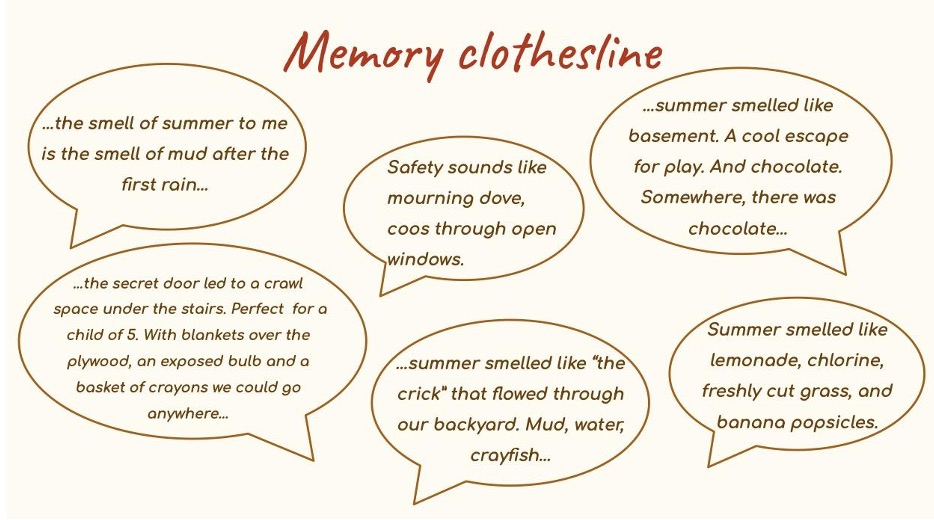
What did summer smell like when you were eight?
If your childhood home had a secret door, where did it lead?
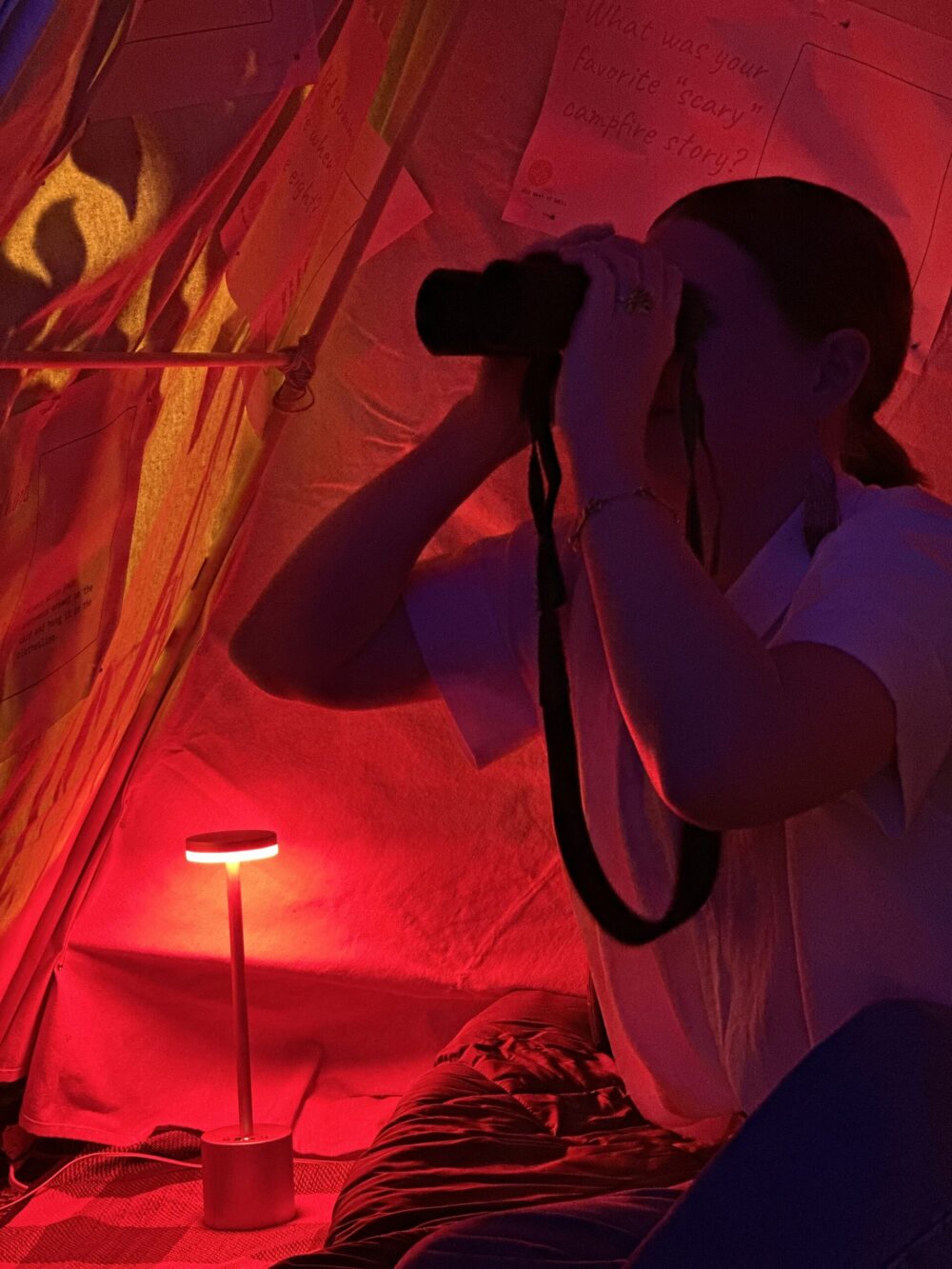
What was your favorite “scary” campfire story?
As kids, building forts, tents, or little houses isn’t just about fun, it’s how we start to shape our world. There’s something deeply human about wanting to make a space of our own, even if it’s just a blanket draped over two chairs.
Spatial Problem-Solving
When children build, they are exploring their natural drive for safety, creativity, and control. A cozy tent is a playful version of what humans have always done: make shelter. These moments can only happen in places that feel safe and free, where we can explore without too many rules, and where simple, flexible materials spark imagination.
Inside those miniature worlds, a child’s brain is thriving. Hippocampal place cells light up to map the new space, while sensory and motor areas coordinate movement and strengthen spatial reasoning and problem-solving. The brain’s reward system floods with dopamine when they create and imagine.
Time in Nature
Camping in nature feels like an extension of that childhood instinct to build forts with a real night sky above. Research shows that spending time outdoors, especially through camping, deeply benefits our minds and bodies: it lowers cortisol-the stress hormone, sharpens attention, and strengthens emotional balance.
Studies on children’s nature camps reveal boosts in well-being, creativity, and social connection. On a neural level, being in nature activates the hippocampus and prefrontal cortex, regions linked to spatial memory, curiosity, and calm focus.
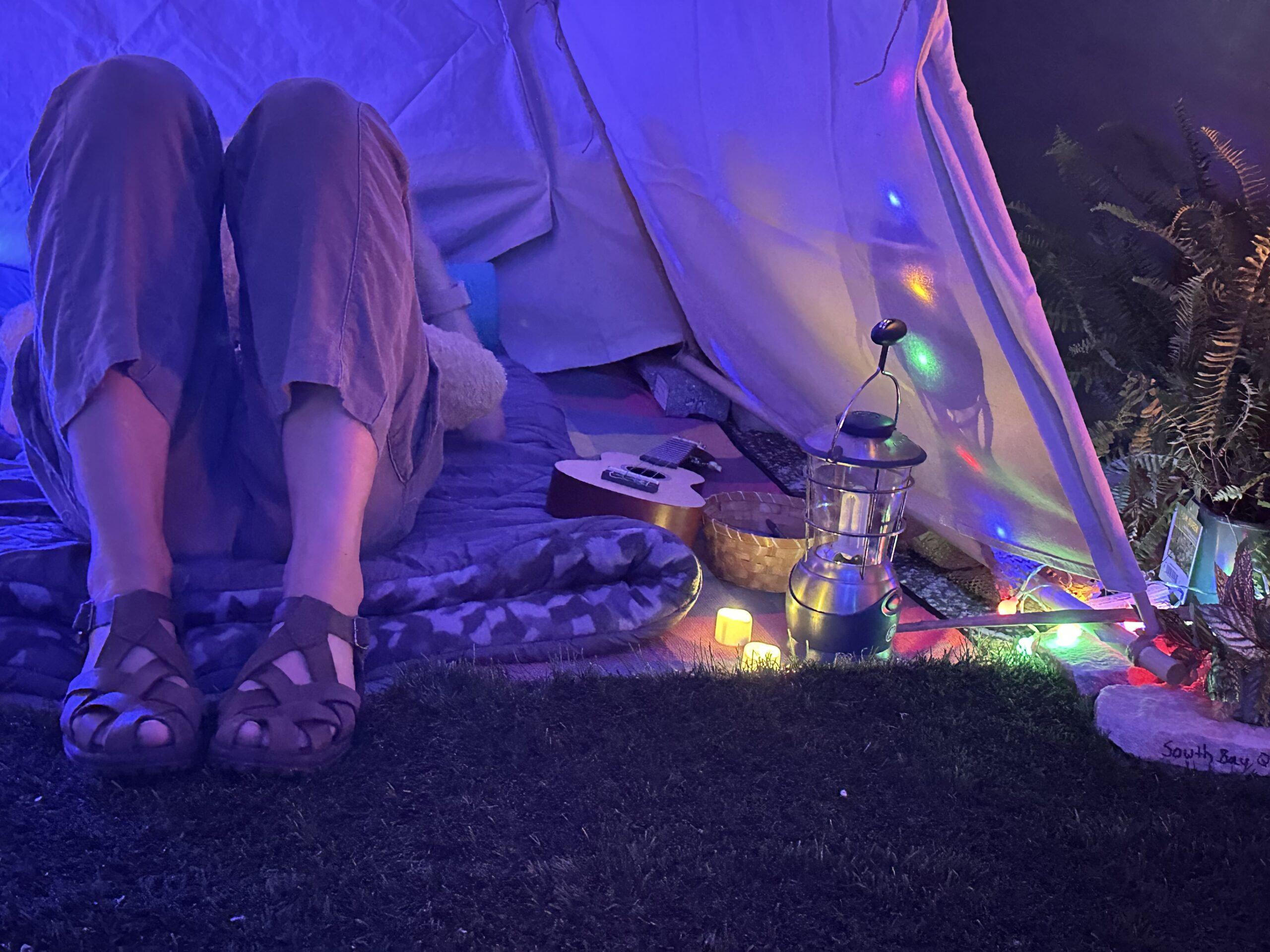
Those two concepts: the play-pretend fort and camping in nature inspired our temporary immersive sensory retreat we installed in our studio. Our goal was to create a “portal” which could instantly transport Stradistas to their childhood memories and provide a moment for rest, reflection, and playfulness, a temporary escape from the stresses of our grownup world.
Key Design Elements:
· Sensory Environment: A light tent-like structure surrounded by ferns, branches, and the scent of cedar, pine, and eucalyptus. Warm, dim light filtered through layers of fabric and plants, evoking the intimacy of childhood hiding places, soft air movement imitating a morning breeze.
· Immersive Soundscape: A gentle ambient forest and rain sounds.
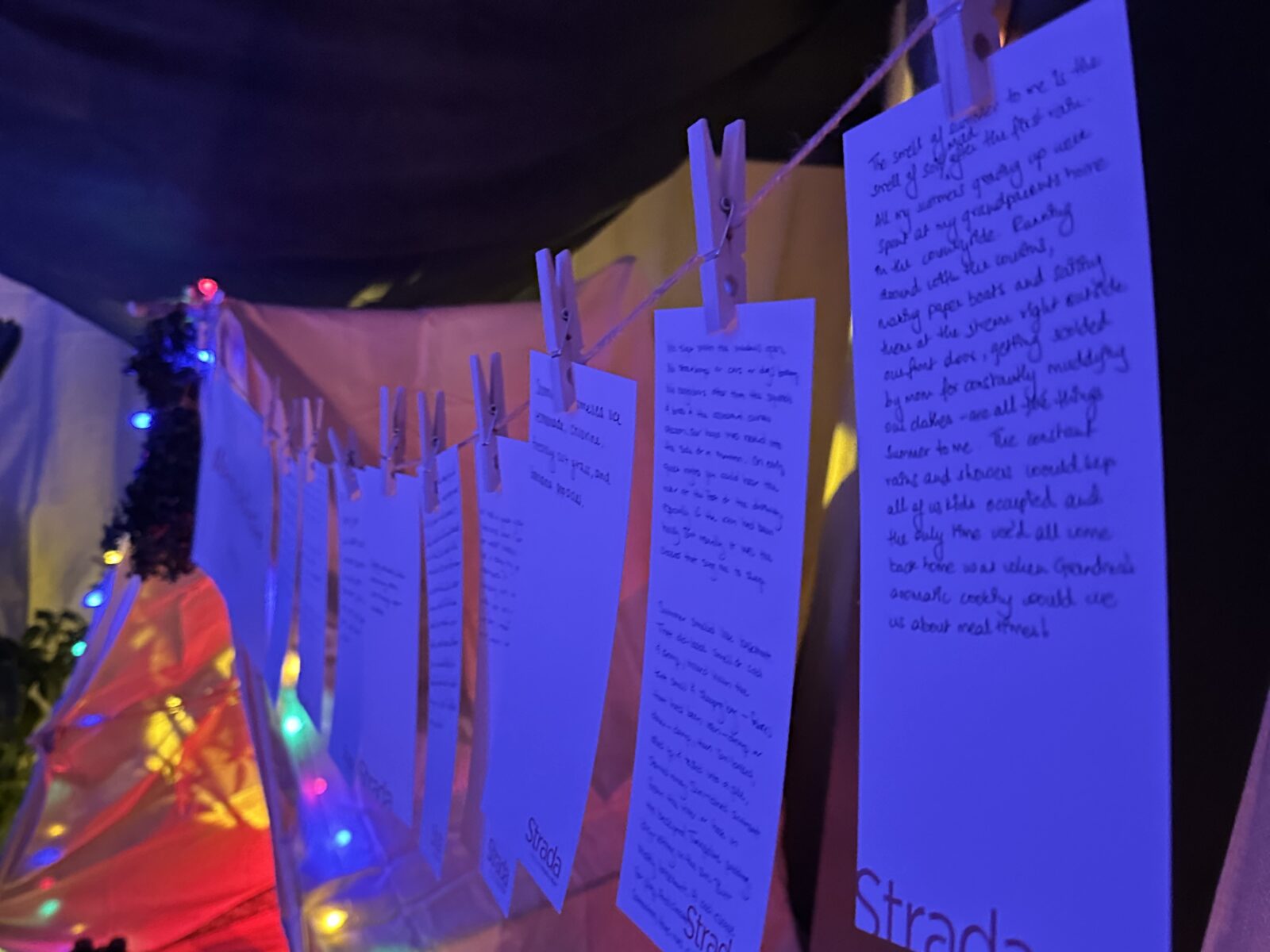
· Interactive Prompts: Visitors received memory cards with reflective questions inviting introspection and emotional recall.
· Memory Clothesline: Participants wrote short childhood stories inspired by their chosen prompt and hang them on a “Memory line” strung across the tent.
· Comfortable & Familiar Atmosphere: Cushions, blankets, nostalgic accessories, and soft textures invite relaxation, comfort and connection.
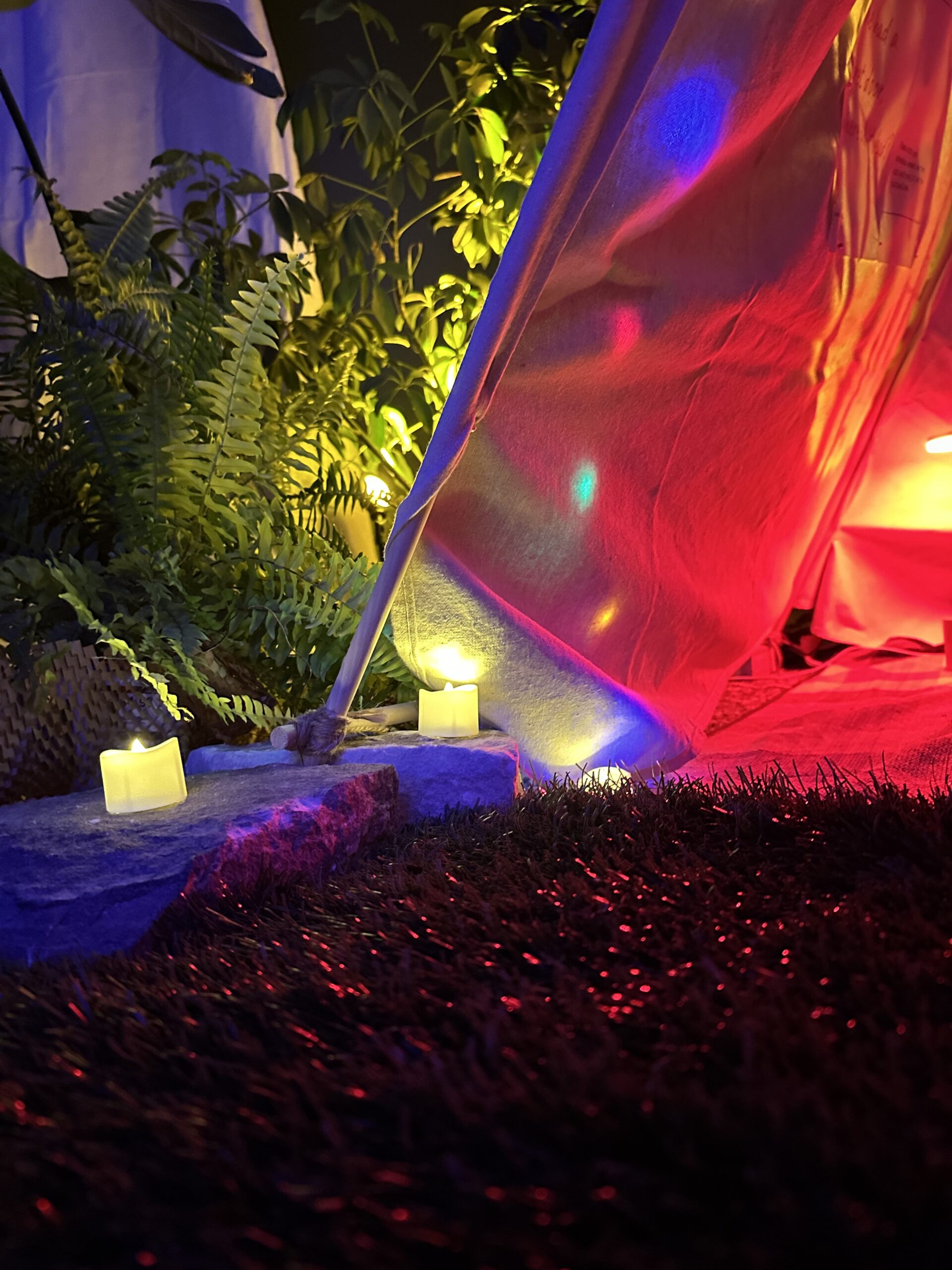
With a rapidly growing demand for rooms to rest and rejuvenate, nature retreats, meditation and reflection spaces and tech free zones in the forward-thinking workplace, hospitality, and multifamily residential markets, the Memory Tent served as a valuable tool for prototyping atmosphere and sensory experience. We also tested the light levels and temperatures, sound and acoustics, scale, volume, and air movement.
This tiny immersive installation was visited by many Stradistas, sometimes they shared the experience with a friend sitting in silence disconnected from the digital noise and distraction, simply listening to the sounds of nature and being present. Many visitors generously shared their memories and left them on the Memory Clothesline. This additional personal human layer made the Memory Tent experience not only relaxing, recharging, and interactive, but also meaningful, connecting, and inspiring.