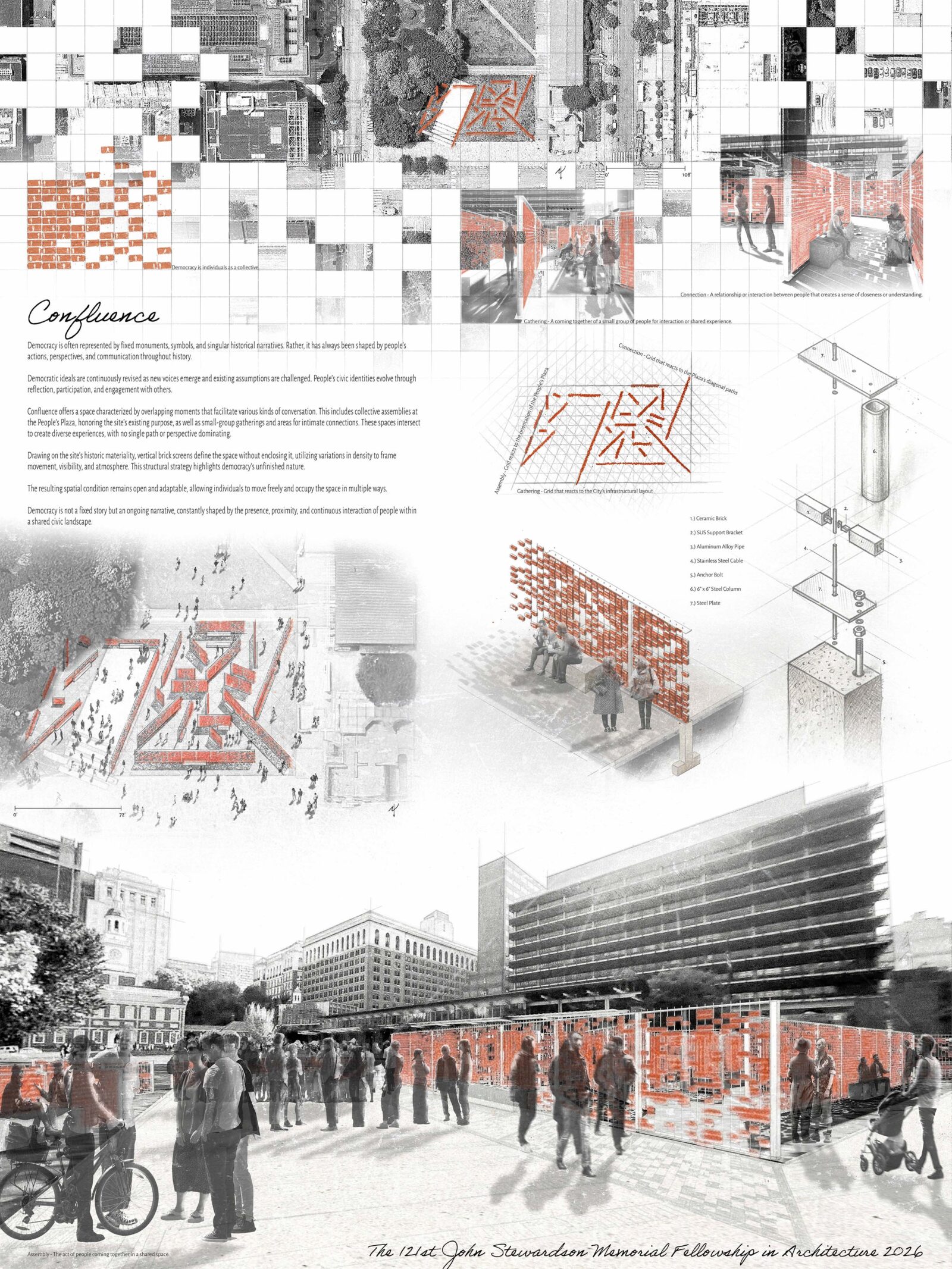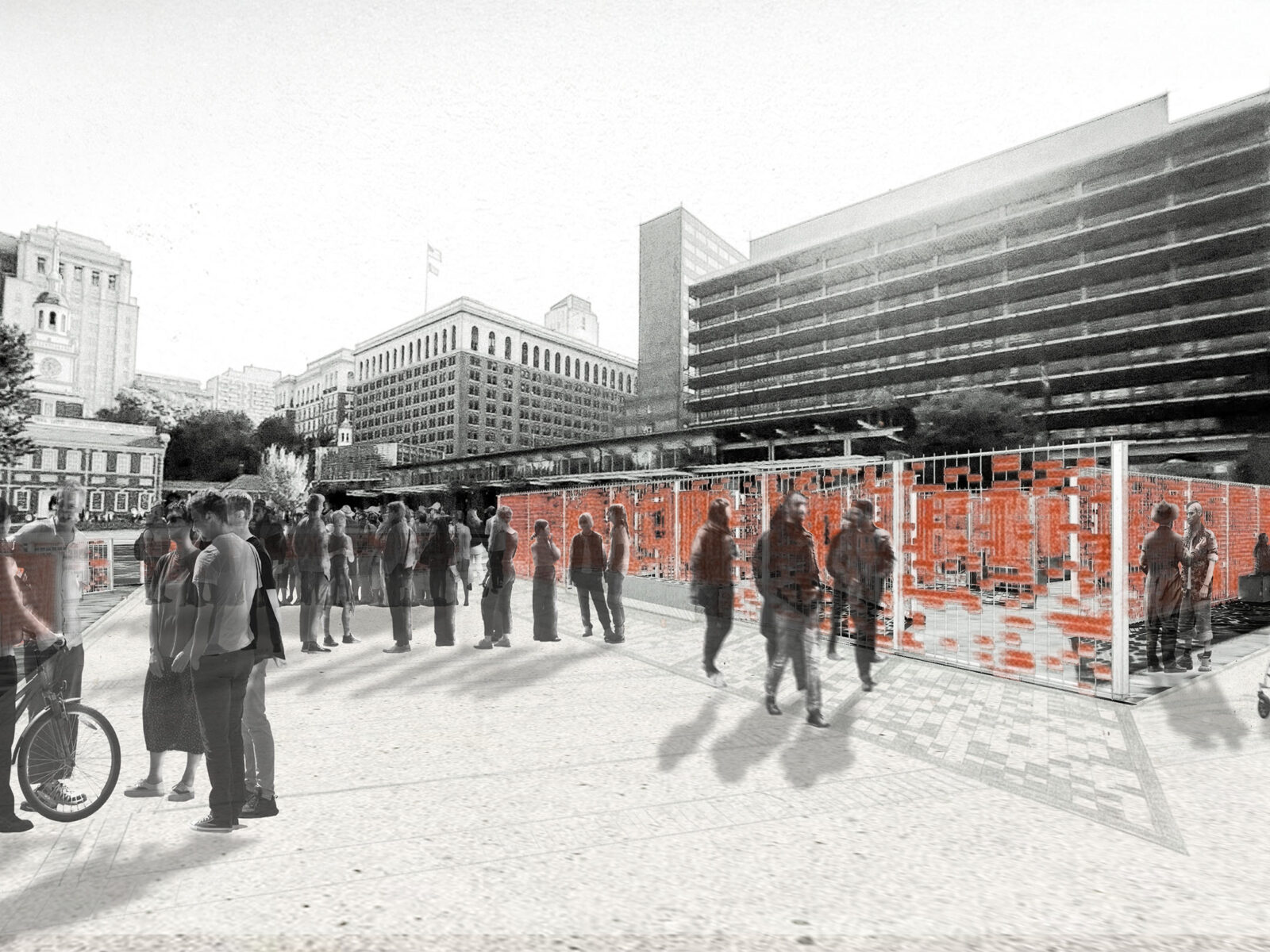
Strada is proud to share exciting news from our Philadelphia Studio! Designer Tim Figueroa, along with his partners Corbin Wise, AIAS & Matthew Behler, AIAS, has been awarded the John Stewardson Memorial Fellowship in Architecture.
This award is a long-standing initiative dedicated to nurturing connection, shared learning, and mutual support within the architectural community. Established more than a century ago, the fellowship was founded not as a static memorial, but as a living commitment to encouraging the study and practice of architecture through relationships—between students, educators, and professionals.
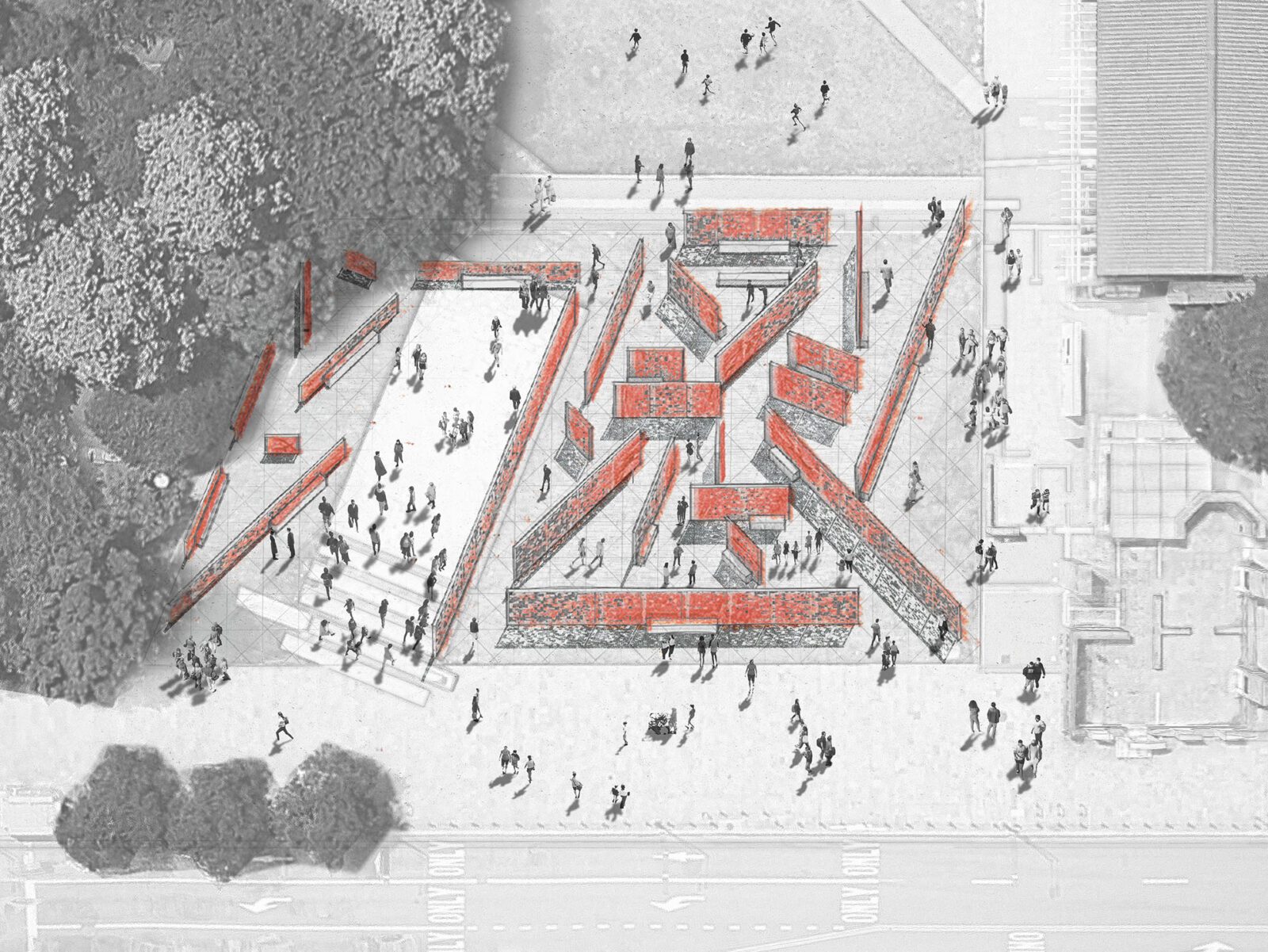

Confluence
Working on this project was one of the most memorable experiences of my senior year. As graduation approached, I wanted to push myself beyond the requirements of school. I wanted to make something with friends, explore ideas that genuinely interested me, and create a project driven more by curiosity than expectation.
I had the pleasure of collaborating on this project with two close friends, Corbin Wise and Matt Behler, both of whom are still students. More than anything, we saw this as an opportunity to work together before I entered a new stage of my design career. The recognition the project received has made it even more meaningful because the qualities recognized by the judges were the same ones that motivated us from the beginning: collaboration, experimentation, and a genuine enjoyment of making things together.
Since we were at different stages of our education and had different experiences, we approached problems differently. We could question one another’s logic, introduce ideas the others had not encountered, and learn from each other in ways that wouldn’t have happened working alone.
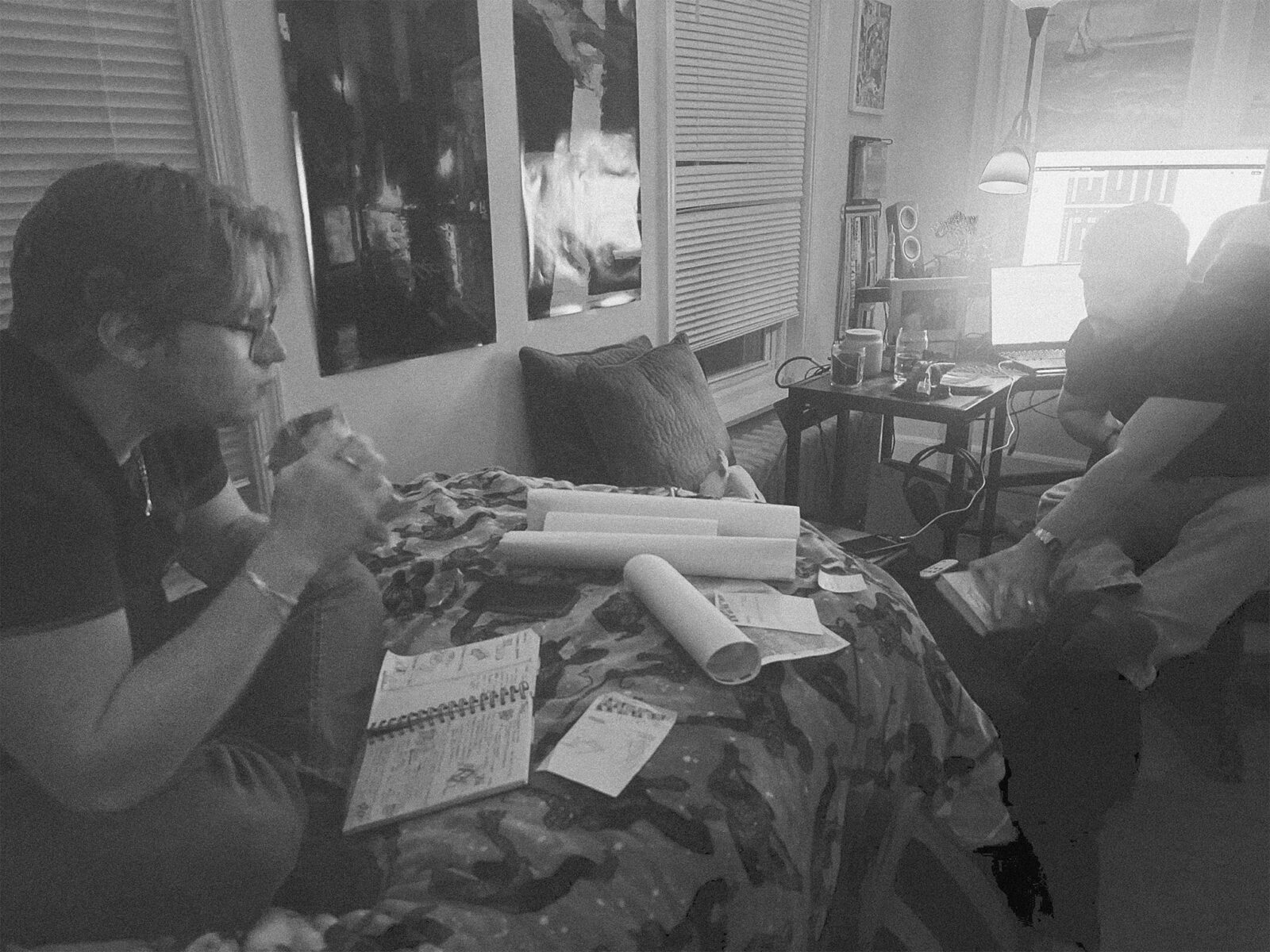
We also intentionally made the process feel less like a typical studio project. Rather than creating rigid work sessions around deliverables, we treated our time together more like hanging out. Late nights in each other’s rooms turned into conversations, whiteboards filled with diagrams, and ideas that continually evolved as we talked through them. Over the course of a week, we distilled those conversations from countless possibilities into three directions, and eventually into one proposal.
The competition asked us to consider the 250th anniversary of the United States and imagine a space for public discourse within a small lot at People’s Plaza. We wanted our proposal to acknowledge the political and social realities surrounding the anniversary without advocating for a particular position or subject matter. Ultimately, we became interested in the idea of perspective not simply as individual identity, but as a reminder that each person contributes to a larger collective picture.
That idea shaped how we presented the project.
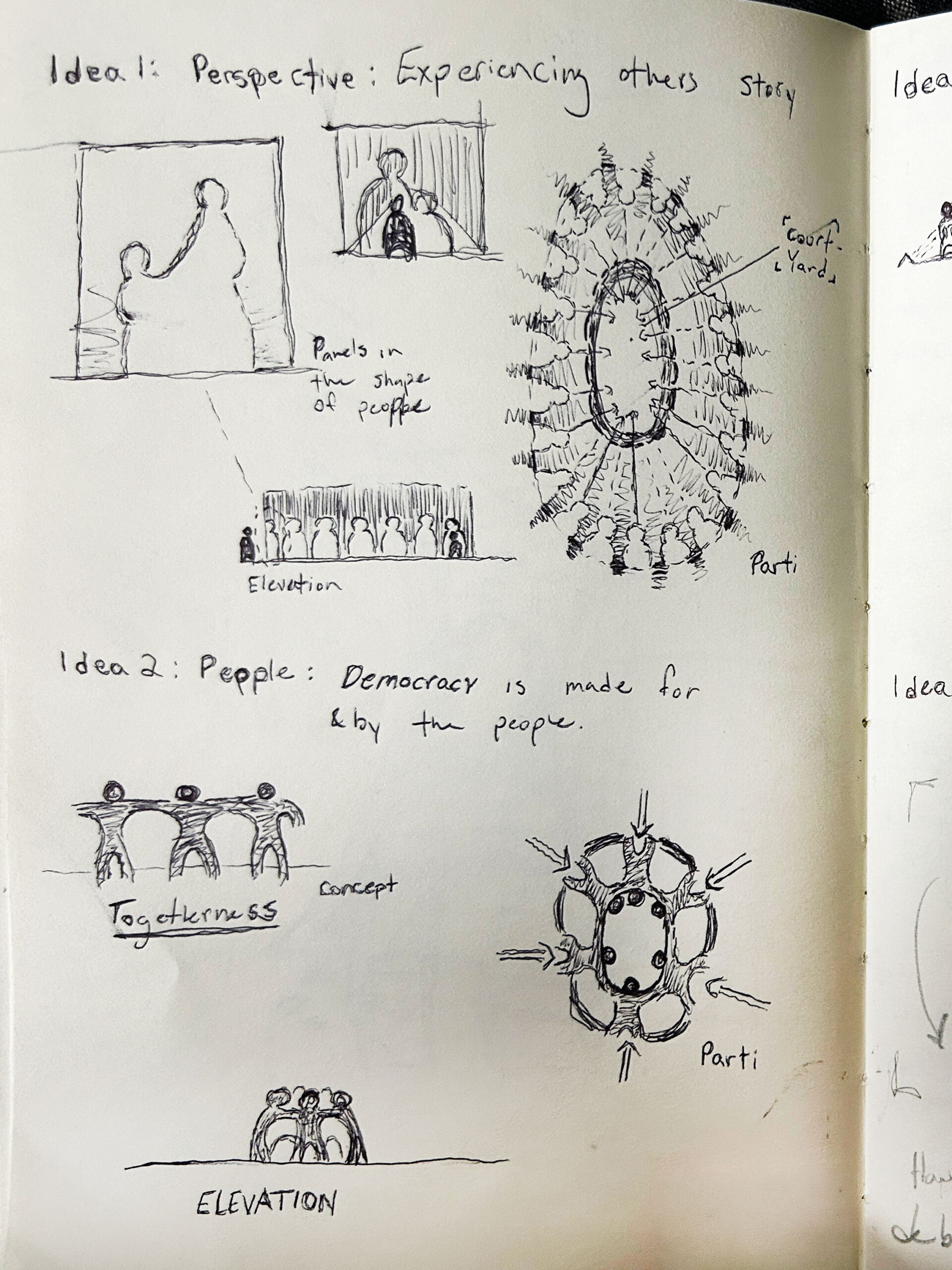
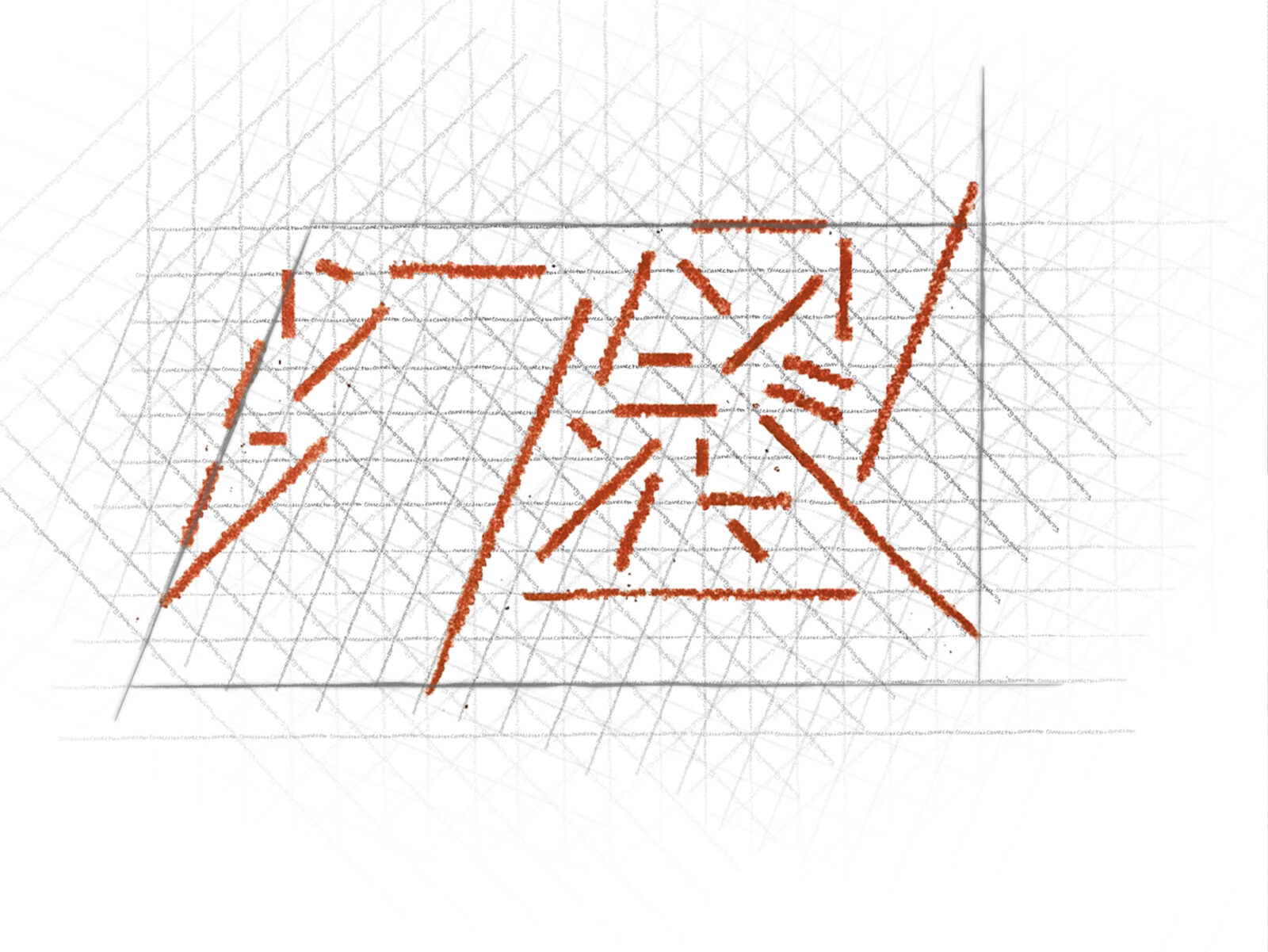
Early sketchbook iterations exploring initial concepts and spatial directions.
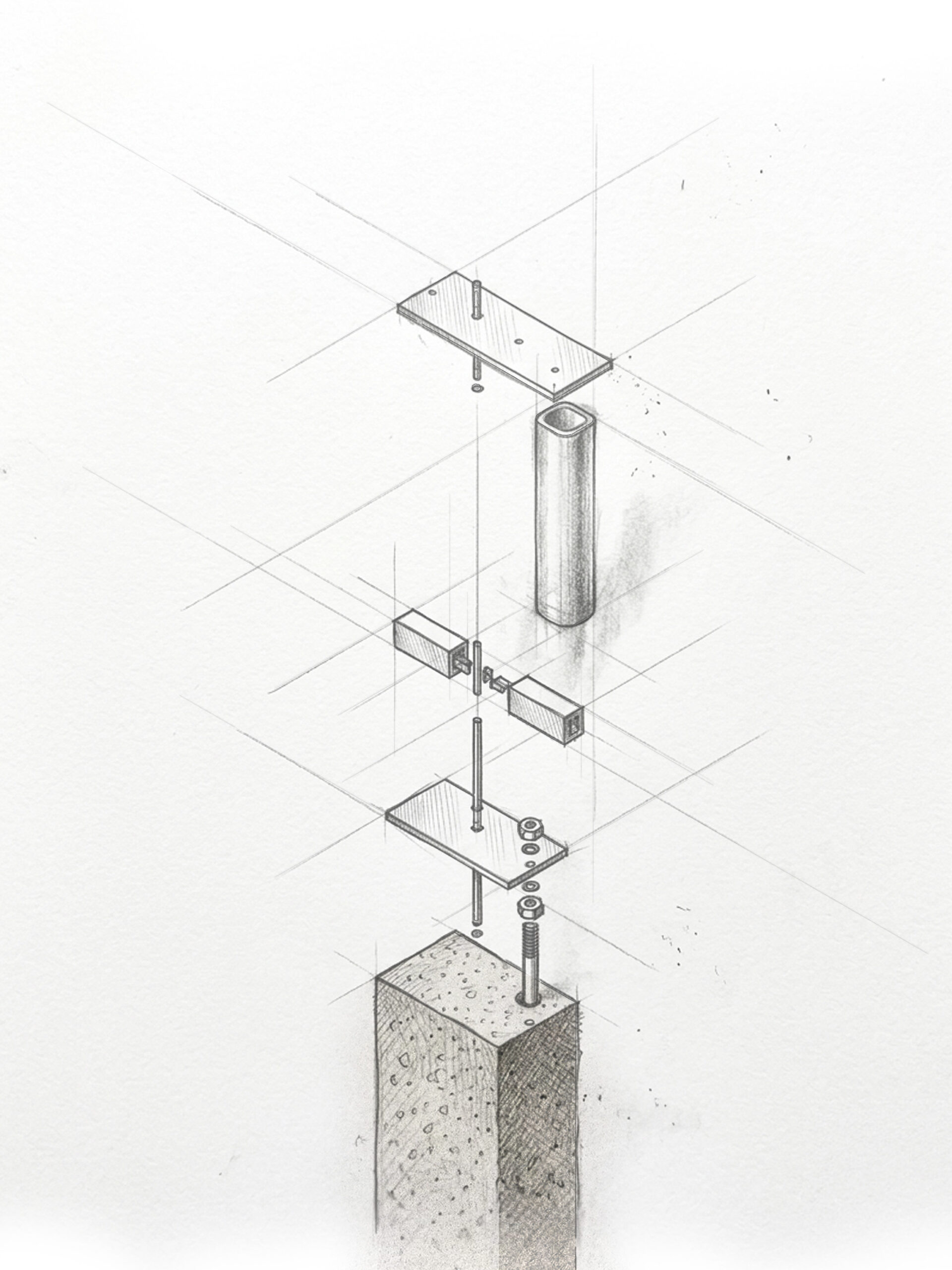
Simplified sketch showing structural considerations and practical constructability.
Exploring Multimedia
With three people came three different design sensibilities and skill sets. Rather than trying to make the work look as though it had been produced in a single, polished style, we embraced those differences and created a collage of our individual abilities working in tandem.
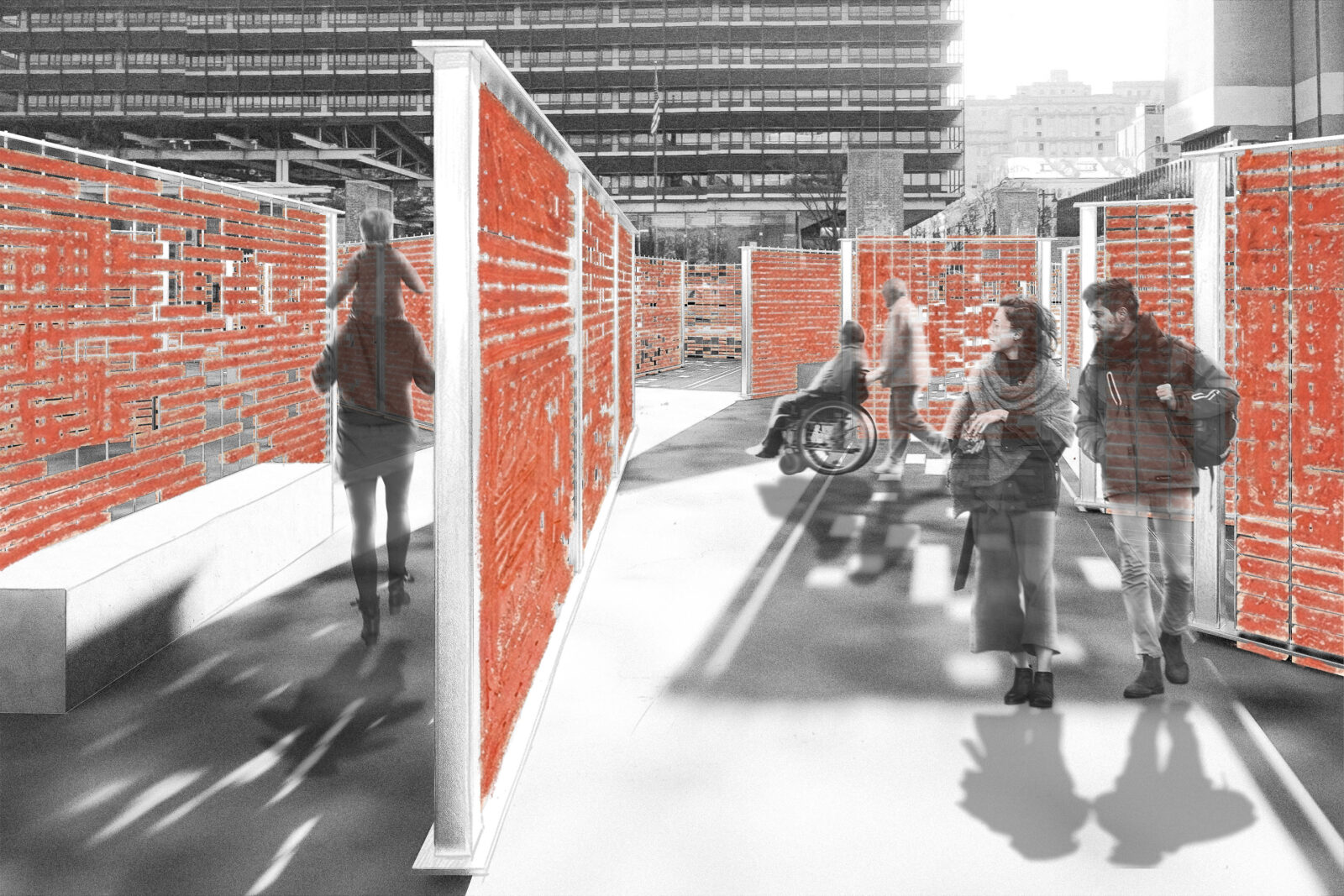
The production process became an opportunity to experiment with multimedia representation. Matt’s technical skills helped us build a Grasshopper script to quickly iterate the brick pattern that became a key part of the proposal. Corbin brought a strong ability to communicate ideas through handwriting, conceptual drawings, and diagrams, distilling complex ideas into clear, easily understood visual statements. My own interests have long centered around the relationship between physical and digital media, so I experimented with colored pencil, graphite, photography, collage, and digitally-produced imagery.
We printed our digital renders and drew over them with colored pencils, allowing the physical marks to exist alongside the digital image. The result was intentionally imperfect. Instead of presenting a collection of standard architectural images, the final submission feels like a cohesive artwork that reflects the human hands behind its creation.
That imperfection became important to us. The hand-drawn elements, varied media, and overlapping images reflected the larger idea behind the project: that different perspectives do not have to compete to create something cohesive. They can overlap, contrast, and contribute to a larger whole, making the final work stronger because of those differences.
Looking Back
With only three weeks to develop the project, we were balancing the competition with demanding academic schedules, graduation, and other personal responsibilities. Yet each of us made time to contribute as much as possible.
Looking back, the award is meaningful not simply because the project was recognized, but because of what it represents about the process that produced it. We began with no expectations beyond the opportunity to spend time creating together. In the end, we created something that reflected all three of us, our different experiences, interests, and ways of thinking.
I am especially reminded of that whenever I pass People’s Plaza on my commute to work. The project is a small reminder that design is rarely a solitary endeavor. The strongest ideas often emerge through the exchange of different voices, perspectives, and ways of making.
That is something I hope to carry forward into my professional life: a continued willingness to collaborate, experiment, and learn from the people around me. More than anything, this project reminded me how enjoyable design can be when the process itself becomes something worth remembering.